Codex Automation Is Tuff
There’s been a lot of discussion about AI safety recently, including researchers at Anthropic openly talking about the risks of increasingly capable AI. Meanwhile, me and my Codex agent are cooking. Well, he’s cooking, I’m watching Regular Show, but team effort fr fr.
Jacob is correct here—we really do earnestly believe AI could kill all humans! I personally think it is >10% within the next decade. I believe Anthropic is trying its best, but we do not yet have a plan to solve alignment for superintelligence and are not clearly on track to.
— Evan Hubinger (@EvanHub) September 9, 2026
I’ve been using Codex for three different things: 1) Refara, 2) job search, including LinkedIn connections and applications, and 3) cold emails.
Refara
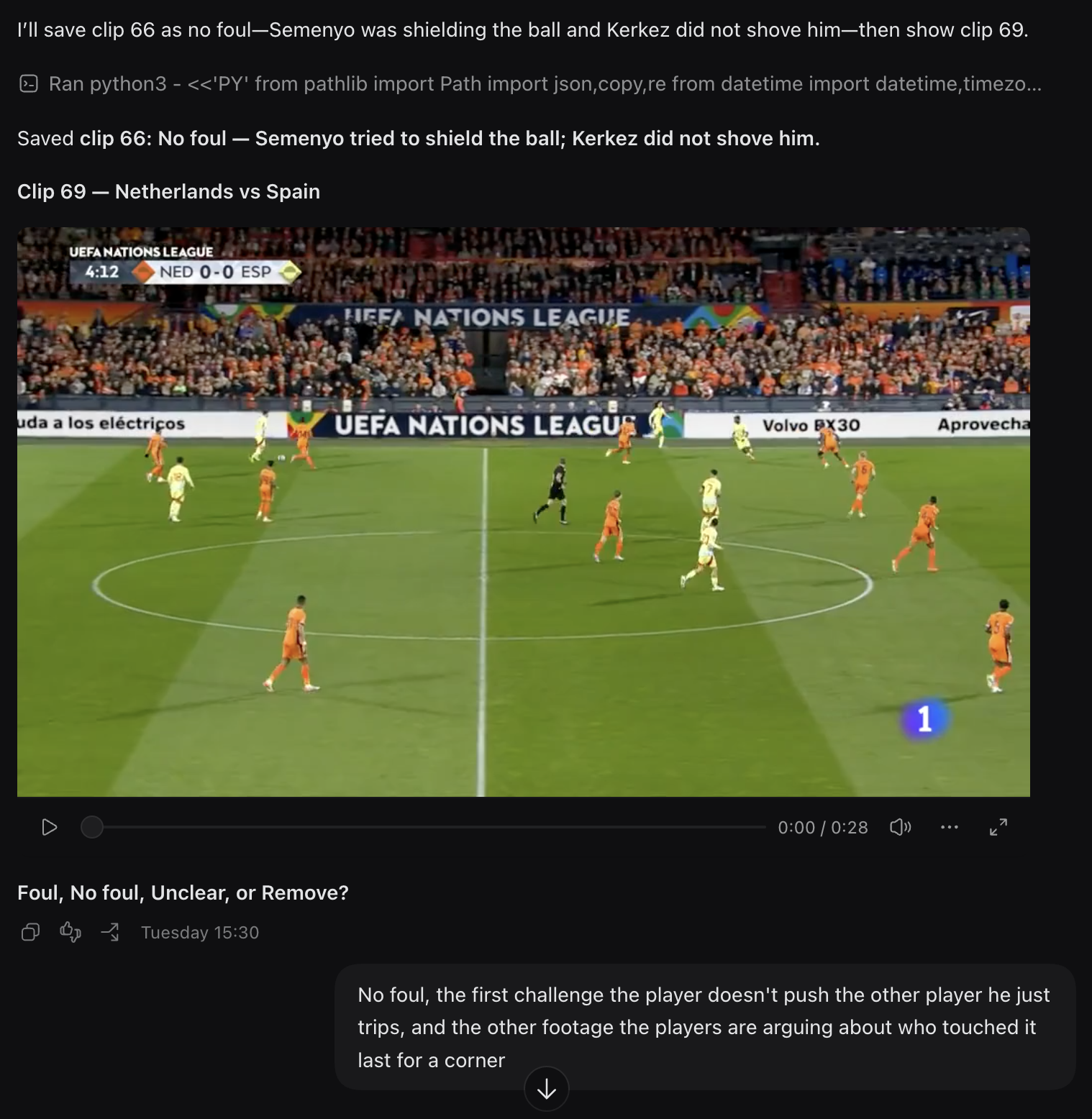
Refara is my computer vision startup that detects fouls in soccer and gives a verdict. In soccer, there are already some automated systems, like offside, but fouls aren’t fully automated because the referee still makes the call with supervision from VAR, a team of video assistant referees.
The goal with Refara is to eventually detect fouls automatically without human input.
I am currently training my first batch, but the annoying thing with any ML project is the data. Being able to train a model is easy enough. You choose a model and then let your computer heat up enough to cook your breakfast.
But for this computer vision project, I need a dataset of fouls.
I am not using Kaggle or another dataset with only a few matches. I took full footage of soccer matches and made foul clips. Those clips are labeled as no foul, foul, or unclear, along with an explanation of what is happening.
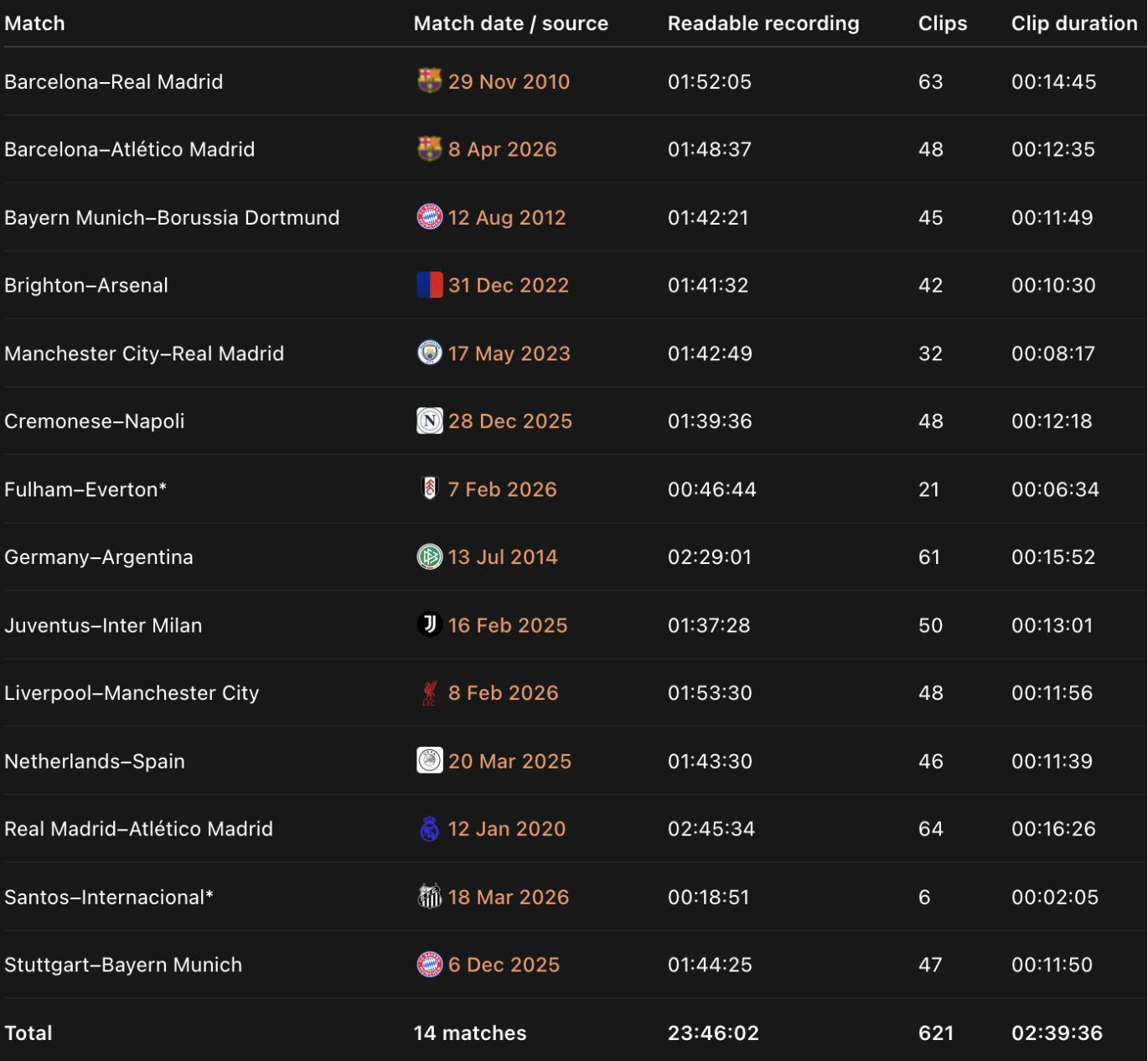
The image attached is what I’m using for Refara’s first batch. I randomly picked matches, downloaded the full matches, and asked Codex to run overnight to make clips of tackles, fouls, and stoppages of play. As you can see, there are 23 hours of footage and 621 clips.
Now imagine I had to do this manually.
I could finish One Piece by then.
Just to paint a picture of how tedious this really is, while yes, I get to tell everyone I’m working on a project, watching old soccer matches for hours is exhausting. I would have to stop at every foul, clip it manually, save it, label it, and then move on. In a soccer game where there can be around 30 fouls, doing this across multiple matches would take forever.
I made Codex run overnight to create foul clips based on its judgment and even give them provisional labels. It doesn’t always get everything right, and in some clips nothing even happens, just a bunch of players running around. However, when I review the clips, I can agree with its judgment, change the label, move on, or completely remove the clip.
It’s still work, don’t get me wrong, but it made my life about 75% easier.
The con is that it burns a lot of tokens and usage.
The pro is that I don’t have to do everything manually. I can let it process footage while I sleep and then spend my time reviewing clips and training models quicker.
Job Search
This one is interesting.
I don’t know anyone who genuinely likes the job search process. You have to apply, get referrals, do interview prep, and somehow figure out whether you can even land an entry-level position in this job market.
If recruiters are already using ATS systems and automation throughout the hiring process, then I don’t think there’s anything wrong with candidates automating some of the repetitive parts too.
I tried using Codex to help apply to jobs for me, and it worked, but it burns an insane amount of credits even when paying for the pricier plans. I understand why. It has to find jobs on the internet, figure out which roles match my resume, make sure they fit the correct timeline for 2027, and then fill out the information correctly.
From my experience using it, I don’t think it’s worth having Codex handle the entire job process for you. You can’t endlessly apply to jobs because you’ll burn through your usage and maybe only apply to 30–50 jobs a week. That isn’t bad, but why use all your credits on that when you still need Codex for coding and other work?
The most important thing is that I make sure my agent isn’t putting in incorrect information. I give it accurate information and my resume, which has all of my real experiences, so it doesn’t make up random stuff. That would be unethical.
The agent handles a lot of the repetitive application work, but I still make sure the roles make sense and that everything being submitted is accurate.
So yes, it can save me time while I’m napping, but I’m not just letting it hallucinate my way into Goldman Sachs.
Cold Emails + LinkedIn Connections
Using Codex for cold emailing is better than using it to apply for jobs, but it still uses a lot of credits. Why can’t Sam Altman just give me unlimited credits fr.
For cold emails, again, you should be careful with how you use them. You shouldn’t randomly send emails to people asking for favors or trying to get something out of them. Be respectful and don’t be too pushy.
I have a template that I wrote myself, and I use Codex to help prepare and schedule emails during the workday.
It’s been effective, and I’ve even gotten some replies back. I give Codex a list of verified emails and my own template, then use it to help prepare and schedule the outreach. I still control what is being sent and make sure the messages are appropriate.
The other connection method is LinkedIn, but I think people aren’t responding there as much anymore. A lot of engineers probably have messed-up inboxes with hundreds of messages asking for referrals, so it makes sense that they aren’t replying to everyone.
The Main Takeaway
I thought once I upgraded my Codex plan, I could sit on my couch playing Rocket League while my whole job process was automated.
To an extent, it does work.
But I also use Codex for coding and Refara, so I can’t just burn all my credits on job applications and cold emails.
I’m trying to figure out a routine where I automate the repetitive parts while still manually looking for jobs, reviewing what the agent is doing, and making my own design choices inside my codebase.
That’s probably the sweet spot for Codex right now. It doesn’t replace all the work. It just makes the boring parts way less painful.
 A blog post written by Shreyas Shukla
The Stoic Stack, in your inbox.
Get notified when I drop a new post. Software, AI, sports, philosophy, and life — unsubscribe anytime.
More Blogs Like This
Has AI Ruined Networking?
Using AI for networking — slop or smart? My honest take on speed, clarity, and where the line really is.
Why I Am Building Refara
Eduardo Camavinga's red card, Joel Embiid's flopping, and Arsenal's dodgy VAR decisions. That's why I'm building my Refara AI referee computer vision startup.
Why Don't Companies Give Reasons for Rejections
I built an AI recruiting system. Here's why giving automated rejection feedback is much harder than it sounds — and why silence might still be the safer choice.