Phil Foden Confuses Me
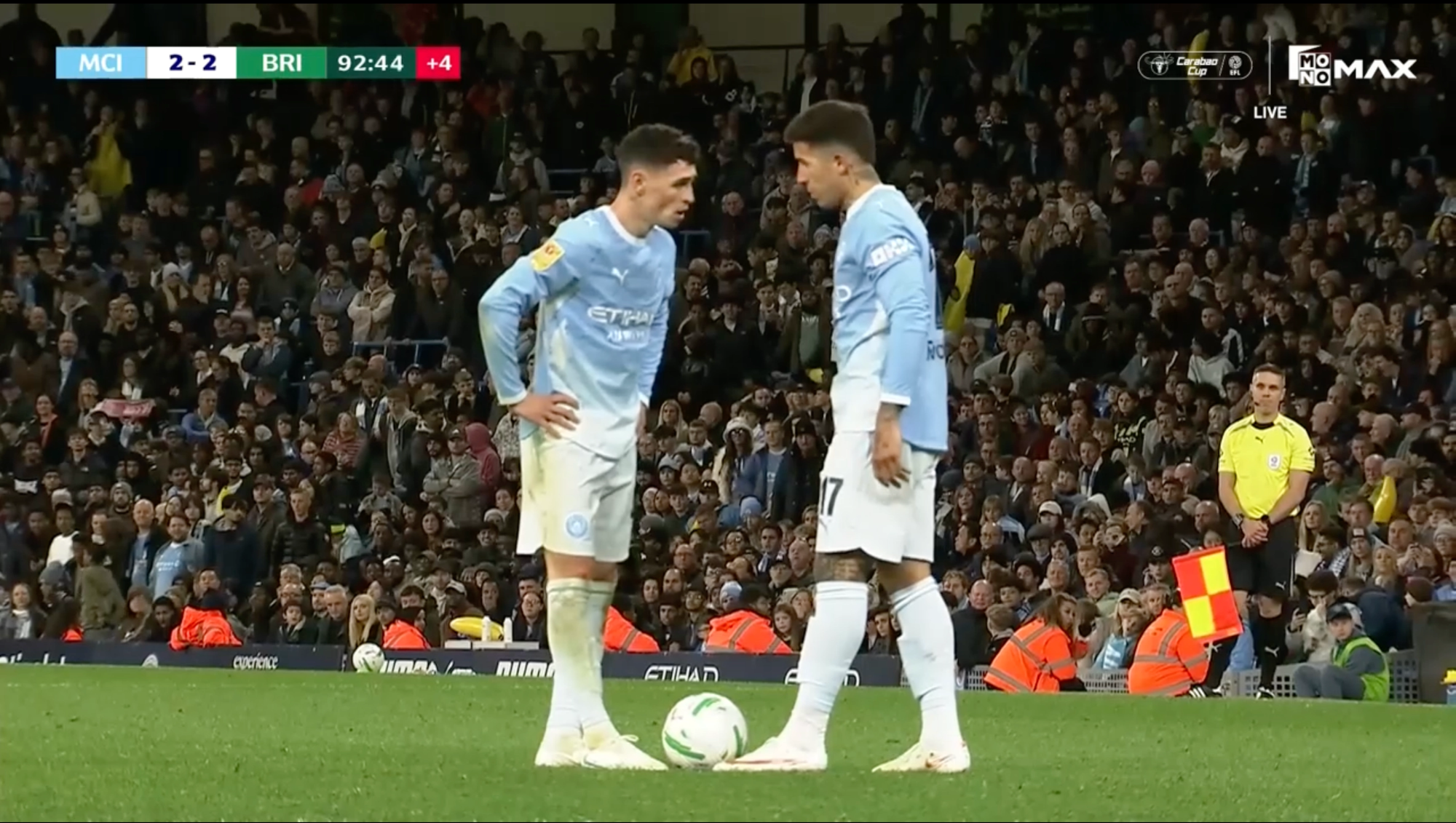
If you don’t watch Manchester City, please stop talking to me.
But there is this player, Phil Foden, who is one of the most interesting players I’ve ever watched. Not making everything philosophical, but he truly represents inconsistency.
Phil Foden joined the Manchester City Academy in 2009 at just eight years old and went on to win 18 major trophies with the club's first team, while directly contributing over 110 goals and 55 assists in all senior competitions.
I have a soft spot for him. He hasn’t played for any other club except Manchester City. He grew up playing in the academy and hasn’t left since. He scores goals, assists, can dribble past anyone, score bangers, has an amazing first touch, and is basically the definition of a maverick football player.
Even if you don’t watch football (you should), you can read those stats and understand that he is a true baller.
But here is the thing. My boy will go from becoming Premier League Player of the Year to absolutely ghosting. His highs are so high that you think he is one of the best players in the world, and then sometimes you forget he’s even on the pitch.
This isn’t me disrespecting Phil Foden. He just confuses me. It genuinely feels like a roller coaster watching him. He becomes our Kevin De Bruyne replacement, wins PFA, suddenly ghosts, doesn’t get called up for England, gets a red card against Manchester United, then scores a hat trick in a Champions League game and suddenly gives me hope again.
Anytime he performs now, anytime he shows his class, I get this feeling that it won’t last. It’s not that he has to score and assist every game. It’s more about impact. I’m not expecting him to be Messi and play at his best level every single game. It just feels like he either performs or doesn’t, with almost no in-between.
This post isn’t really just about Phil Foden. It’s about extreme wins and extreme losses.
I think most people imagine growth as somewhat linear, maybe even exponential. But what about people who zigzag?
Imagine one year you get a high-paying finance job, find a significant other, get a dog, build a business, and somehow start going pro in boxing.
Next year, everything disappears. Your wife leaves you, you’re 0-7 in boxing, your business is bankrupt, but your doggo never leaves you.
Then the next year is amazing again. New girl, winning boxing record, business is back up.
And then you fall again.
Everything disappears… except your doggo.
Does that actually happen in life? Winning at the highest level and then losing at the highest level?
No, genuinely, I’m asking because I’m not sure myself.
What does that kind of growth represent? Confidence? Talent? Or is that just how life works?
How can one year you look better than LeBron, and the next year you become Ben Simmons… sorry Ben.
I don’t think talent fully explains it.
If you can perform at an elite level for an entire season, then clearly the ability exists. It’s not one lucky game or one lucky month. Someone like Phil Foden has shown that level multiple times. Confidence probably explains part of it. You can start second-guessing every pass and every shot even though the actual ability hasn’t disappeared. But that almost makes confidence even stranger. How can something intangible change the performance of someone who has already proven what they can do?
By the way, Foden isn’t the only athlete like this. Kai Havertz, Marcus Rashford, maybe even someone like Klay Thompson or Josh Allen.
The other answer is that it’s just life. I know. Boring answer. Some people might genuinely have growth that zigs and zags without one clean explanation. Isn’t that scary? Imagine knowing you can be a world-class chef or the best writer in the world, and then one day that version of you seems to disappear.
But maybe the opposite is also true. If you reached that level once, maybe that knowledge is what keeps you pushing when you fall.
Because there are also people who never really come back. Paul Pogba, Dele Alli, even Jack Grealish. Players who, at their best, were incredible, but eventually stopped being talked about the same way.
So what happens when you think you’re just in the zag phase, waiting to zig back up, but the zig never comes?
Then there’s the complete opposite type of person. You know those people who are basically a 7/10 every single day? They consistently do the work well. It’s never a wow performance, but it’s also never a disaster.
Would you rather consistently be a 7/10, or have the ability to be prime Messi one day and then have two touches and get subbed off in the 60th minute the next?
The 7/10 performer might never get put into conversations about greatness because they haven’t shown that unbelievable peak.
Meanwhile, the other person has shown you greatness.
They just can’t always access it.
Even though I’m asking generational questions that make me a top-five philosopher of all time, maybe it isn’t even up to us to choose.
I don’t think Phil Foden is going, “Okay, I’m going to score four goals against Manchester United, then get three assists against Brighton and score a volley from the edge of the box against Villa. But next month I’ma be Casper the Ghost.”
At the Ballon d’Or ceremony, Thierry Henry said something interesting: working hard is a talent.
Can consistency also be described as a talent?
What if the ability to perform the way you know you can, over and over again, is a skill in itself?
Maybe having talent and being able to consistently access that talent are two completely different things.
You could have the ability to produce a 10/10 performance, while someone else has the ability to produce an 8/10 performance every single time.
Their ceiling might be lower than yours, but they can actually reach it whenever they need to. That might explain the zigzag.
Phil Foden’s talent was never really the question.
Maybe the harder talent is being able to access that version of yourself consistently.
And maybe if you’re consistently a 7, you don’t need to be envious of someone when they’re at their 10.
You never know when they might fall back to a 3.
 A blog post written by Shreyas Shukla
The Stoic Stack, in your inbox.
Get notified when I drop a new post. Software, AI, sports, philosophy, and life — unsubscribe anytime.
More Blogs Like This
Are Cycles Meant to be Broken
Not every cycle needs to be broken. Some need to be made smaller, and some are worth keeping. On Suits, Pokémon Showdown, comfort, and consistency.
The Invisible Weight Is You
You can think about anything, but you choose not to. On identity, slow change, and the invisible weight of your own patterns.
You Remember the Detours
The milestones are meant to define us. So why do we remember the detours? On uncertainty, peace, and learning to trust your instincts.