I Know Why I'm Not Magnus Carlsen
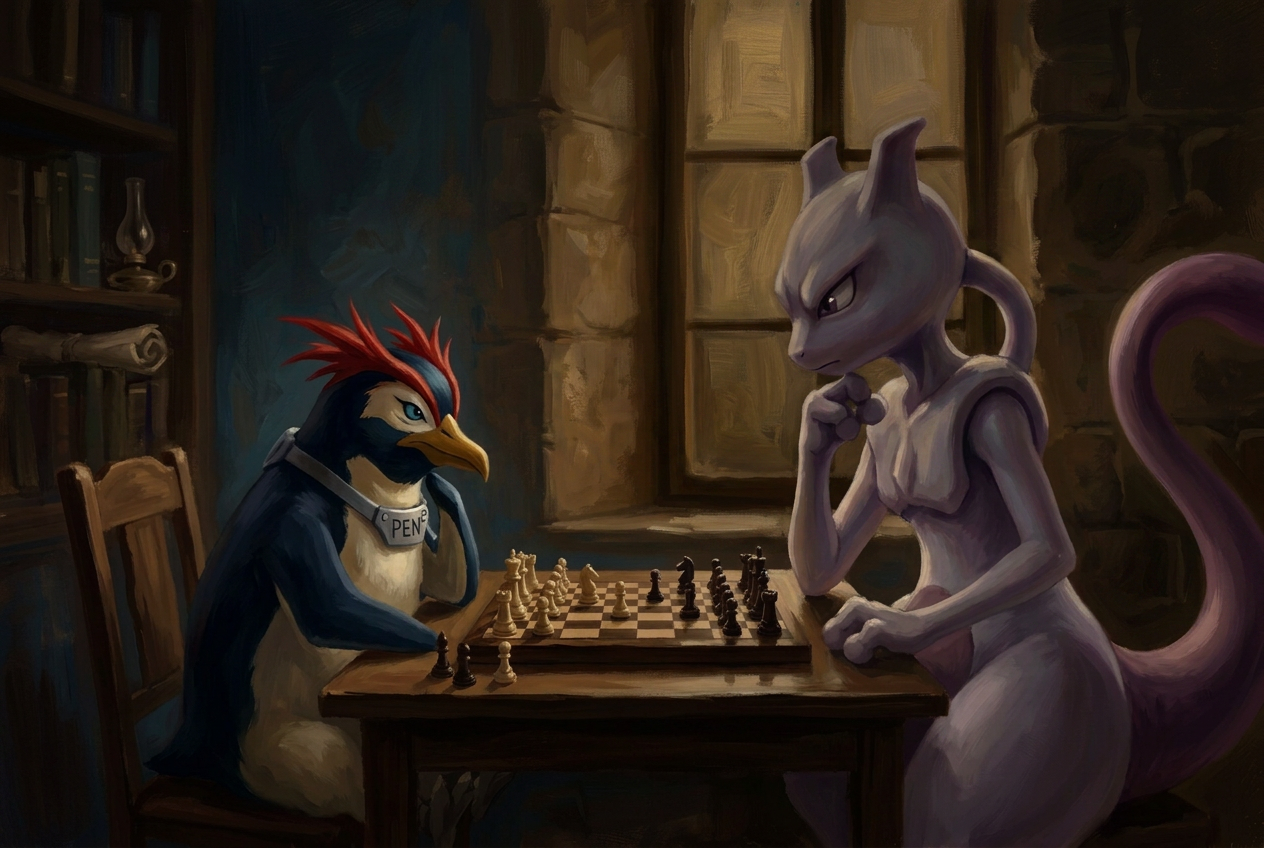
I just started playing chess, and I keep losing. But it's not that I don't know why. I 100% know why. But do I really have to grind chess? Can't I just LARP as a 2500 Elo player and act like me and Magnus Carlsen are homeboys?
I developed bad habits that are stopping me from progressing in Elo, and maybe writing them down can help me and other beginners become better chess players.
Playing Late at Night While Watching Parks and Recreation
I think it's hard to play casual chess when you are a beginner, because you need to understand why you are playing every move. Chess requires you to ask why before every move. You can't just move pieces around and hope for a checkmate.
My routine for chess is quite bad. I keep playing on my bed while, on another tab, I'm watching Parks and Recreation. So after a couple of moves, I swap back and forth. Since I'm a beginner, I'm going to make mistakes, and even players with low Elo can capitalize on your misclick or wrong move. Giving up one piece in a game can be drastic. You can't lose your queen early on or for free. You can't even make bad trades, and you can't make your king vulnerable.
It's kind of stupid because most hobbies, like watching series, playing video games, reading, and writing, all happen at night when you are tired and want to wind down. You can do them before going to sleep for 30 minutes. However, chess isn't something you can do when you're not locked in. You don't have to be hyper-focused, but you do have to be attentive.
When I was in Seattle, I talked to a person who was working as a SWE at Apple, and he said that he plays chess during his breaks because it helps keep him sharp. It makes sense. It makes you think through every move. You are alert, and you tend to do better. This is going to sound like I'm gaming chess, but when I'm playing chess on my monitor while taking a break from Claude making my whole CS portfolio, I wish I was joking, I tend to play better because my mind was already in a loop of thinking about databases, project hierarchy, bugs, etc. I personally noticed that as I win more games, my Elo goes up. It kind of sucks because when you are a beginner, you can't have a laid-back approach. You don't understand the fundamentals.
So just replace reels with chess during your 15-minute coffee break, and you're chilling.
Puzzles Help to an Extent, but They Feel More Productive Than They Are
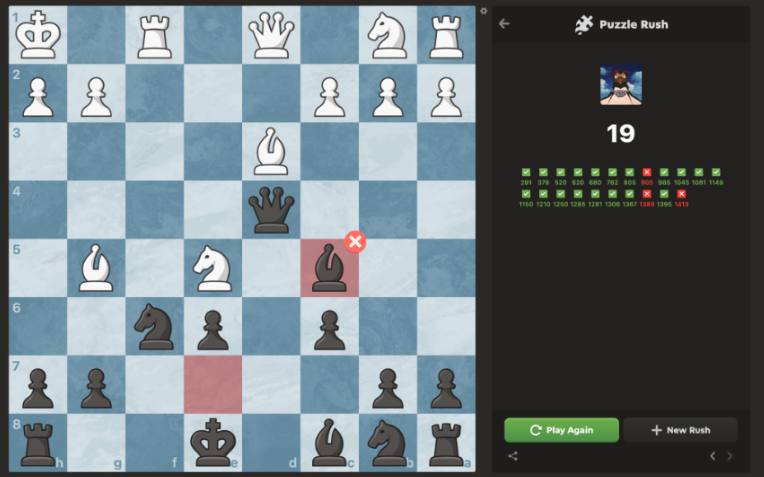
Before playing any games on chess.com, I was very nervous because I suck and I didn't want to keep losing. I wouldn't say nervous exactly, but I didn't feel ready to hop into a game. I would constantly do puzzles. It's a mode where it gives you a game scenario, and you have to make the best possible move or moves. So it could mean moving your queen for a checkmate, moving your knight to a check and then checkmating the king with the bishop, or trading material and being ahead. Puzzles teach you to think about making the best possible move.
After you get the hang of it, the first 15 puzzles are all super easy, in my opinion, because they follow the same pattern. Many of them are just repeat puzzles. It's usually one to three moves that lead to checkmate because the queen is protected by either a rook, bishop, or knight. Some of the harder puzzles are the endgame ones, because you need to calculate whether to move the king or promote the pawn. Some other harder puzzles are when you can't see an immediate check, checkmate, or material trade. You have to make a move in order for the opponent to make a move to defend or sacrifice, which then lets you make your move. Some inception things, yk.
Puzzles definitely helped me because they sharpen the mind to constantly look for the best move. However, puzzles seem more productive than they are because they don't simulate an actual game. In a game, you are thinking about developing pieces, the opening, the middlegame, and the endgame. These puzzles are usually the endgame. And you have unlimited time if you choose to.
Playing the Magnus Chess Bot Creates Bad Habits
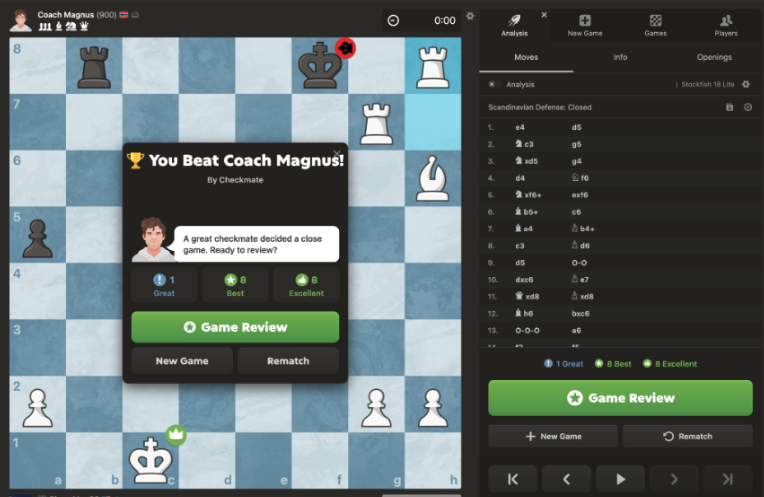
My last couple of points are all similar, but when you lose chess games, which is inevitable, you start to practice in other ways. I already talked about puzzles, but the other way is playing bots.
On chess.com, there is a Magnus bot that, after every move you make, ranks the move. So you know if you blundered, made a common move, or made a brilliant move. The reason why I think it created a bad habit is because I got comfortable playing the bot, and there is a rewind feature. So after every move you make, you can rewind it and try to capitalize.
It's a great feature to try different openings and tactics, but you can't get too used to it, because when you play an actual game, there is no redo. You can't just have it as a safety net.
Stop Avoiding Playing Other Chess Players. Time Limits and Pressure Exist, so Create That Environment.
This post might not have generational advice, but the best way to get better at chess is to simply play other people. I think the most important part of chess is the time limit. You can't practice with no time limit and then hop on when there is a time limit. You can't take ages. That's why simply playing against other people is better than trying to do endless puzzles and Magnus bots.
I think I avoided playing chess normally because I felt stupid and cared too much about my Elo. I thought losing three games in a row meant that I was getting worse. And since my Elo is already low, I kept thinking I was doing things wrong and needed to change and analyze my games.
But yeah, me and Magnus Carlsen are homeboys.
 A blog post written by Shreyas Shukla
The Stoic Stack, in your inbox.
Get notified when I drop a new post. Software, AI, sports, philosophy, and life — unsubscribe anytime.
More Blogs Like This
Are Cycles Meant to be Broken
Not every cycle needs to be broken. Some need to be made smaller, and some are worth keeping. On Suits, Pokémon Showdown, comfort, and consistency.
The Invisible Weight Is You
You can think about anything, but you choose not to. On identity, slow change, and the invisible weight of your own patterns.
I’ma Focus… After One More Reel
The reels are the easiest escape. But what if the real problem is a goal built on fear, rather than something you actually want?